
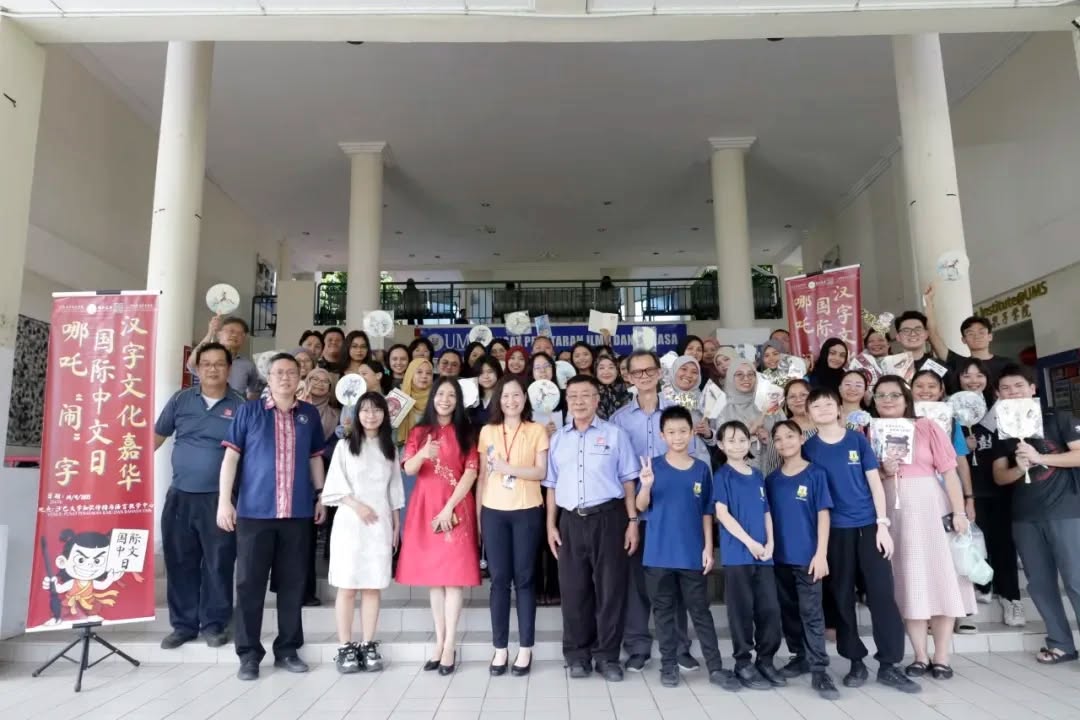
To celebrate the 2025 International Chinese Language Day, the Confucius Institute at Universiti Malaysia Sabah (CI@UMS), in collaboration with the Kota Kinabalu Calligraphy Association, successfully hosted a special event titled “Nezha ‘Nao’ Zi: Chinese Character Carnival” on 13 April 2025 at the Centre for the Promotion of Knowledge and Language Learning, UMS.
At the opening ceremony, Assoc. Prof. Dr. Huang Yuehua, Director (China) of CI@UMS, introduced the origins, significance, and annual observance of the International Chinese Language Day. She highlighted that Chinese language is one of the six working languages of the United Nations and also as one of the most widely spoken languages in the world. “Chinese language is more than a tool for communication—it is a vessel of 5,000 years of civilization,” she said, encouraging local youth to explore the power and charm of the language through cultural immersion.
With the theme “Chinese: A Gift Through Time and Space”, the event drew inspiration from Nezha: Birth of the Demon Child—one of the highest-grossing films in global box office history. The character of Nezha, beloved by audiences, was cleverly woven into five interactive cultural stations: movable type printing, handmade papermaking, rubbing, calligraphy and cultural crafts, and photo souvenirs. The event offered a hands-on, time-travel-like journey for UMS students and staff into the beauty of Chinese characters, ancient Chines printing, paper-making technology, and the brilliance of ancient Chinese mythology.
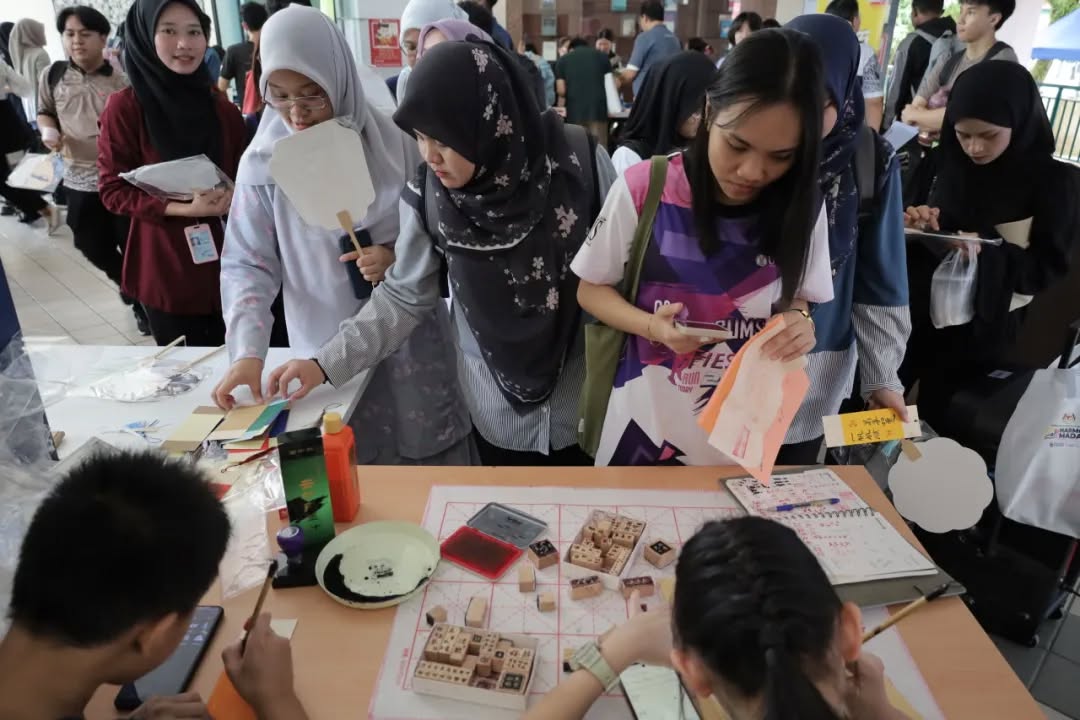
Movable Type Printing Experience|Witness the Ancient Miracle of Living Words
As one of the four great inventions of ancient China, movable type printing revolutionized knowledge dissemination. The carnival featured a dedicated experience zone where participants selected Chinese characters, inked type, and printed Nezha’s iconic quotes or Chinese poems themselves.
“This is amazing, were ancient people this advanced centuries ago?” exclaimed by an excited student, holding up their very first print. As sheets of freshly printed Chinese characters emerged, awe and pride filled the room. History wasn’t just taught—it was relived.
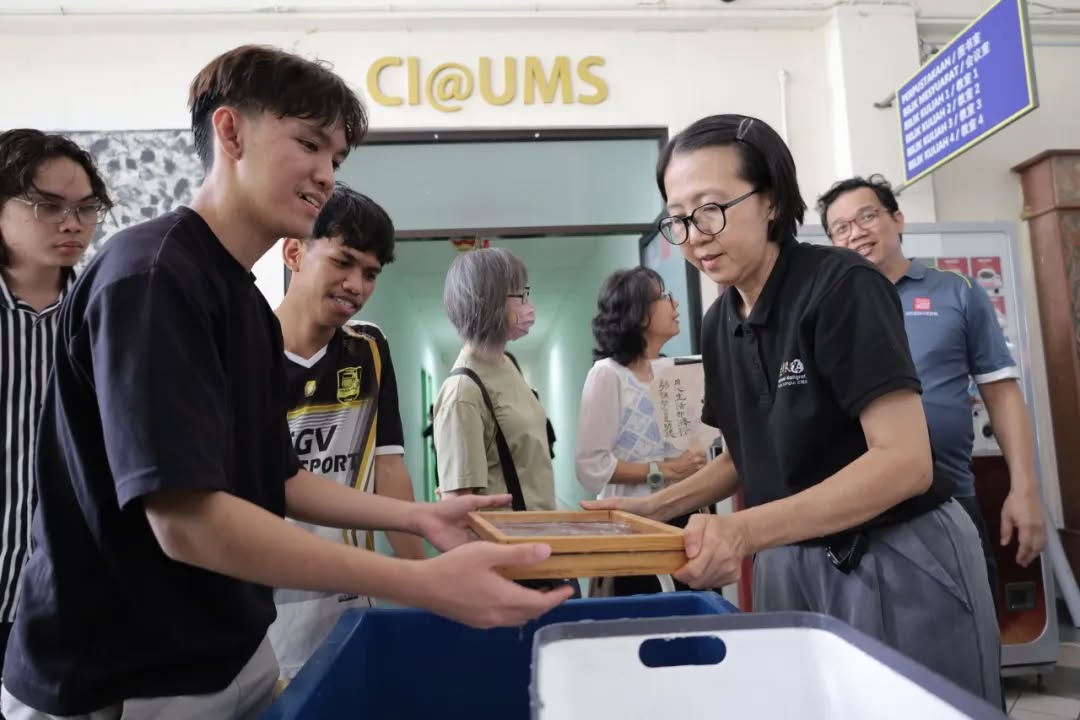
Handmade Papermaking Workshop|The Birth Journey of a Single Sheet
Another ancient invention, papermaking, received its spotlight through a hands-on workshop. Starting with pulp derived from tree bark, participants engaged in the full process of scooping, pressing, and drying paper by hand.
While waiting for their sheets to dry, students marvelled at the texture and fiber patterns, expressing admiration for the ingenuity of early craftsmen. “This isn’t just paper—it’s a birth of culture,” one participant reflected. The session reminded everyone that every page of writing is a gift passed down from history.
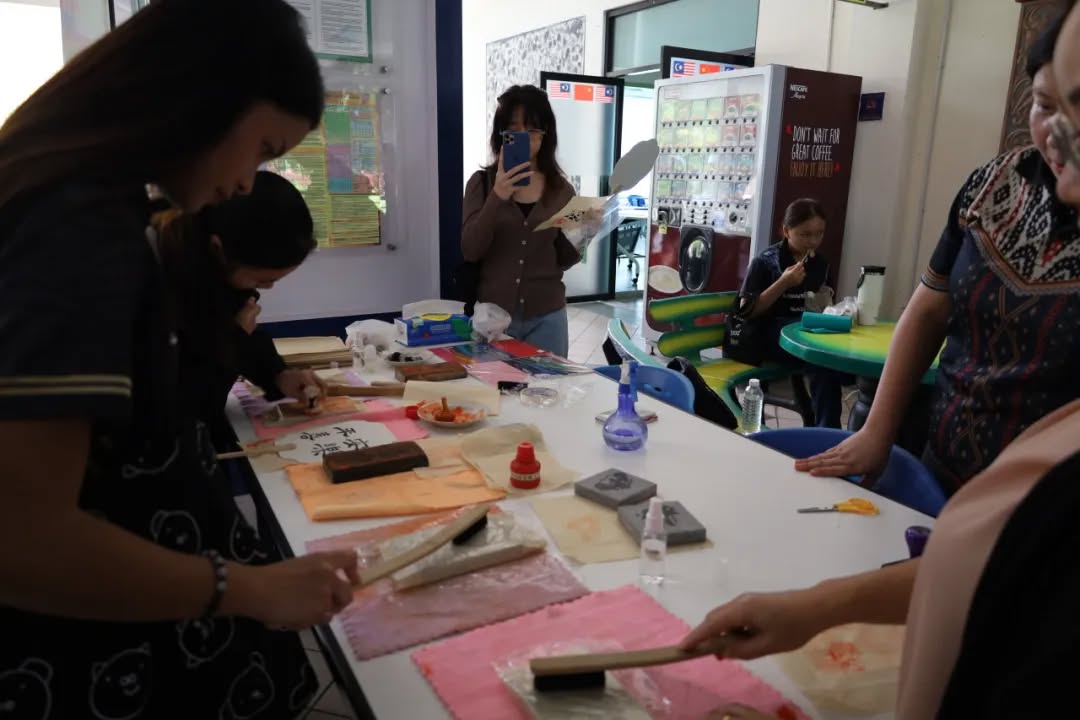
Rubbing Station|Let History Leave Its Mark Today
In the rubbing station, guests used rice paper and ink pouches to carefully transfer inscriptions and Nezha illustrations from carved stone plates. With every gentle tap, ancient characters slowly emerged—bridging millennia.
“This is how the ancients preserved their words!” came the amazed voices. Participants gained not just a new skill, but a quiet connection to the past—one imprint at a time.
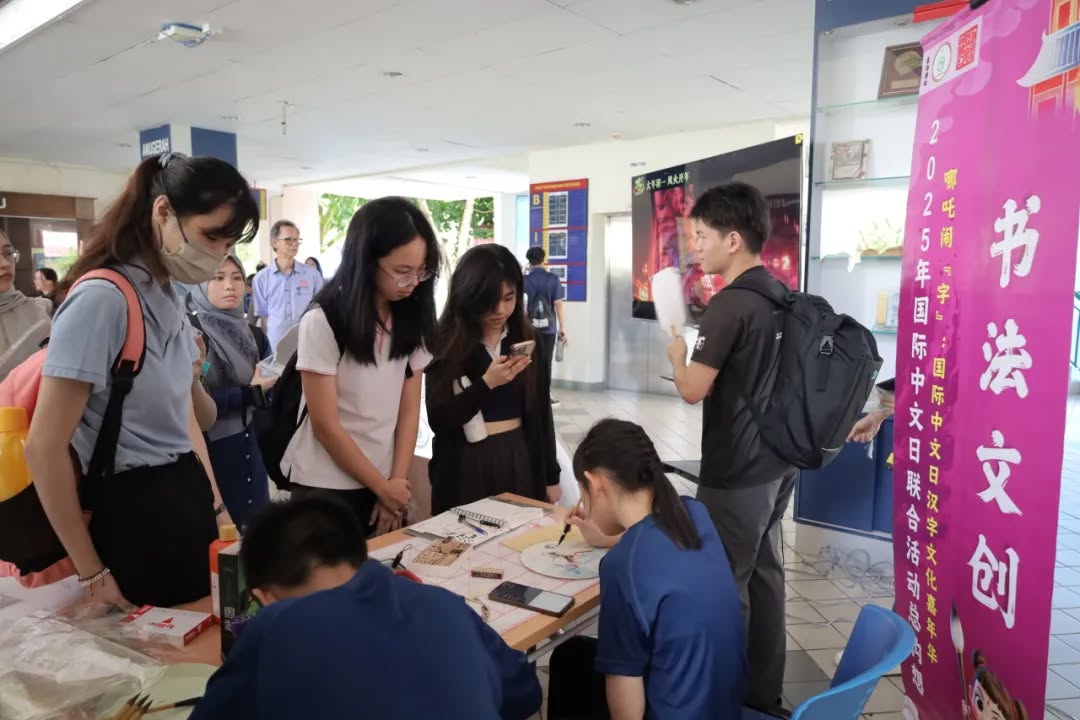
Calligraphy & Cultural Crafts|Take the Beauty of Hanzi Home with You
As a crown jewel of Chinese art, calligraphy was front and center at the cultural crafts booth. Teachers from the Calligraphy Association demonstrated a range of scripts—from seal script to regular script. Attendees chose their favourite characters and either penned them themselves or requested a custom creation on bookmarks, fans, or postcards.
One said, “I’m gifting this word to my mom,” while another planned to display theirs on their desk for motivation. Each piece, sealed with the Chinese Language Day stamp and Nezha motif, carried both artistic and emotional weight. Calligraphy here became more than just form—it became expression.
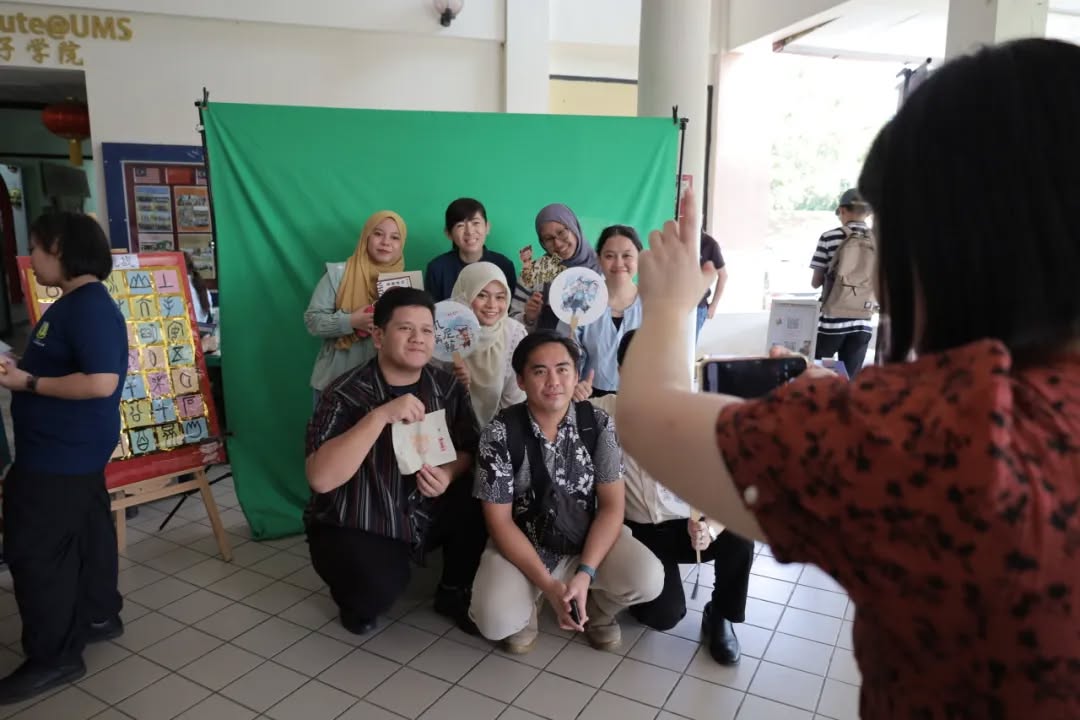
Photo Souvenir Zone|Capture Your Exclusive Moment with Nezha and the Art of Hanzi
The photo zone turned green-screen magic into personalized Nezha-themed snapshots. Posing with handmade crafts or mimicking Nezha’s legendary stances, participants were transformed into cloud-riding heroes within minutes. These vibrant photos captured not just smiles, but memories of cultural discovery and joy—proving once again that language and culture shine brightest when lived.
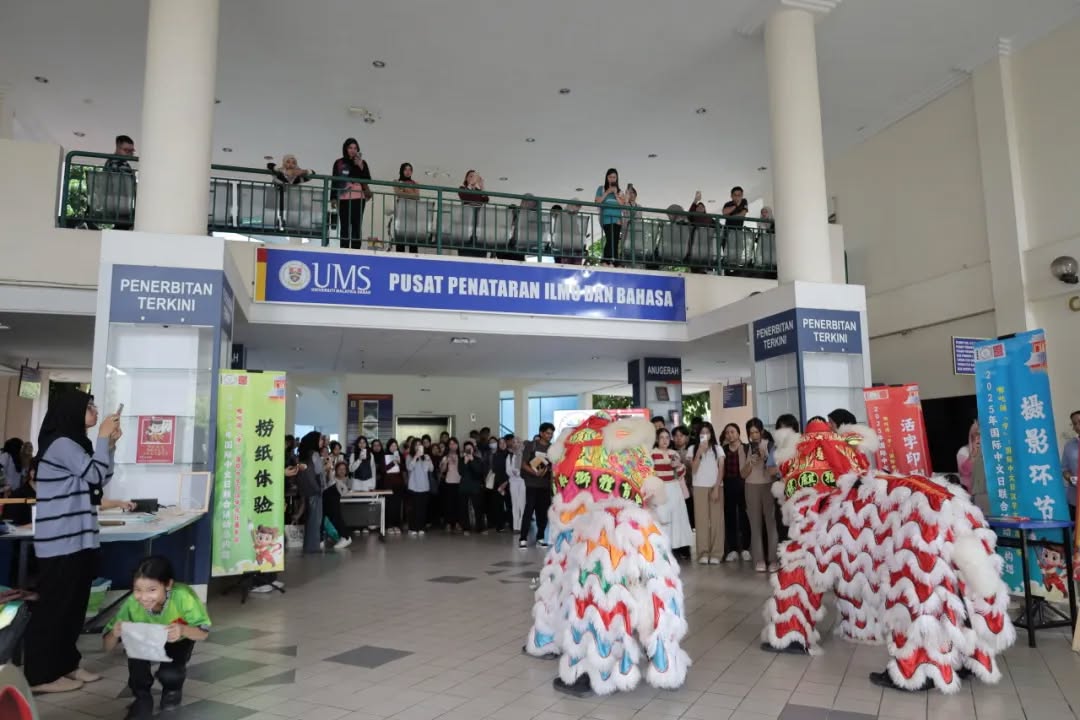
The event concluded with a dynamic lion dance performance by students from SJK(C) St. Peter Telipok, echoing the festival's vibrant spirit. With around 800 attendees, the “Nezha ‘Nao’ Zi” carnival was more than a celebration—it was a journey across time, fusing tradition with innovation, and lighting the path for future cultural engagement.