
To promote cultural exchange between Malaysia and China and deepen overseas students’ understanding of Chinese civilization, the Confucius Institute at Universiti Malaysia Sabah (CI@UMS) and the Jiangxi China Culture College, with the support of the Foreign Affairs Office of the People’s Government of Jiangxi Province, China, jointly organised the “EXPLORE CHINA: CI@UMS STUDENT MOBILITY PROGRAM 2025”. The program was successfully held at the Chinese Culture Institute of Jiangxi from 8 to 15 September.
A total of 19 faculty members and students from Universiti Malaysia Sabah (UMS) systematically studied the historical context, traditional crafts, and ecological philosophy of Ganpo culture through lectures, field visits, intangible cultural heritage workshops, and academic exchanges. The program opened with a special lecture on “An Overview of Jiangxi Province” and was structured into three modules: “Historical Context – Artistic Heritage – Ecological Wisdom.”
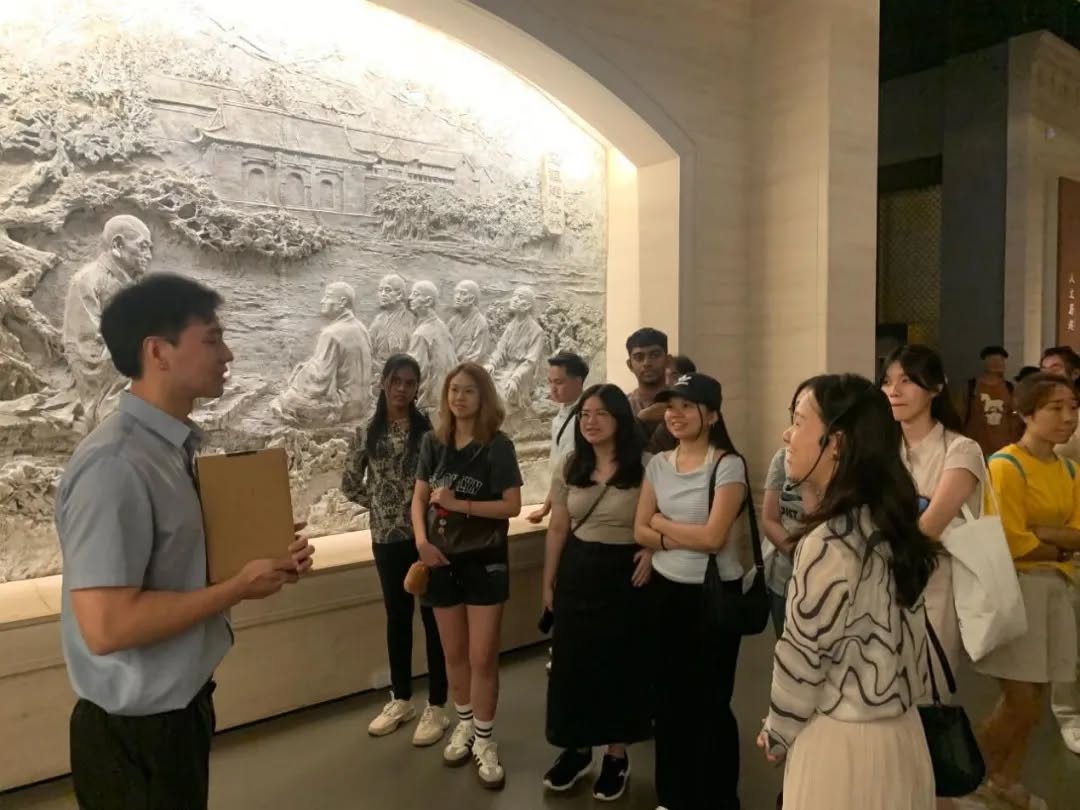
During historical site visits, participants climbed the Tengwang Pavilion to explore the grandeur of the Tang Dynasty through Preface to Tengwang Pavilion. They also visited the Jiangxi Provincial Museum and the Nanchang Han Dynasty Haihun Marquis Museum, tracing Jiangxi’s political, economic, and cultural development since the Han Dynasty through artifacts such as bronzeware, gold, and bamboo slips.
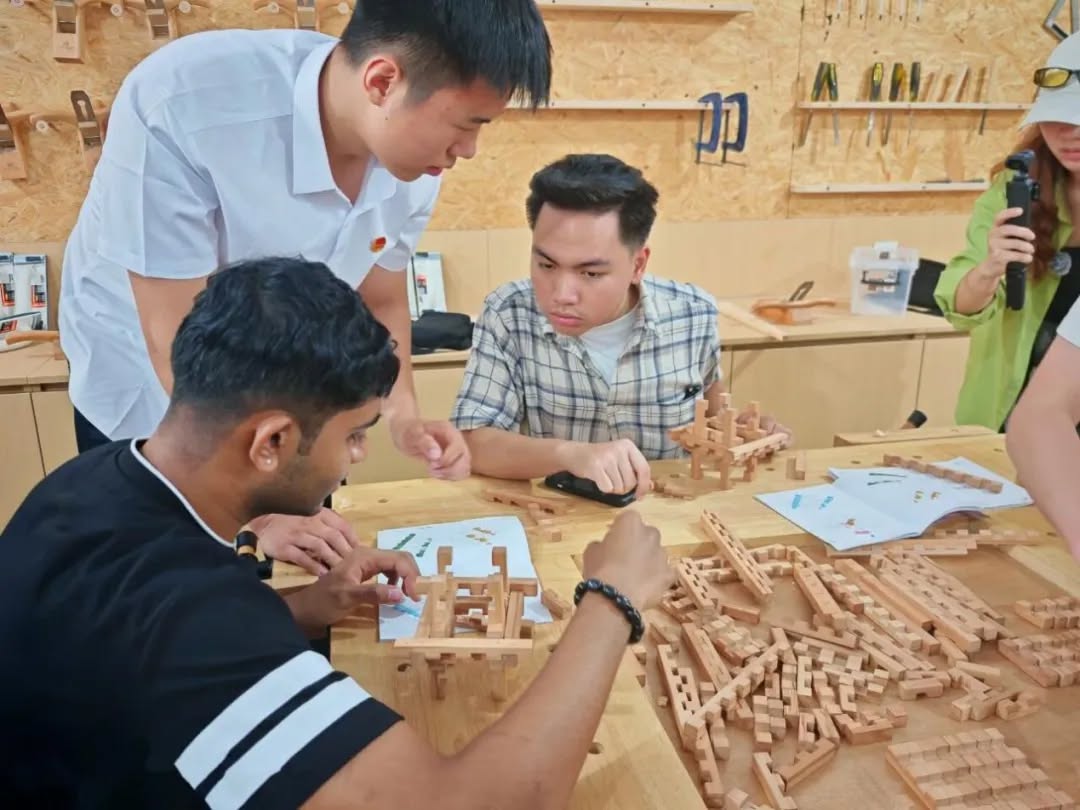
The artistic heritage component highlighted traditional craftsmanship. Participants observed the “Yangshi Lei” architectural models and experienced mortise-and-tenon woodworking techniques. They also studied the history of Chinese ceramics at the Jingdezhen China Ceramics Museum and visited Sanbao Ceramic Art Village to practice pottery skills such as throwing, trimming, and glazing.
The ecological wisdom module connected learning with natural landscapes. At Meilingmo Forest Park, participants immersed themselves in Jiangxi’s lush scenery, while at Anyi Ancient Village they examined the architectural principles of traditional dwellings, reflecting on the Chinese philosophy of harmony between humanity and nature.
The program also included exchange activities with faculty and students from Jiangxi Science & Technology Normal University, where participants engaged in hands-on cultural experiences such as wearing traditional Hanfu and practising Chinese calligraphy.
This study program not only enhanced the CI@UMS participants’ understanding and appreciation of China’s rich cultural heritage but also built a platform for cultural exchange between the youth of both countries. As one of the organisers, CI@UMS played an active role as a bridge, contributing to the planning and implementation of the program and injecting new momentum into Malaysia-China educational and cultural cooperation.