
30st LBWT “Independent Schools in Sabah, STTSS Experience”
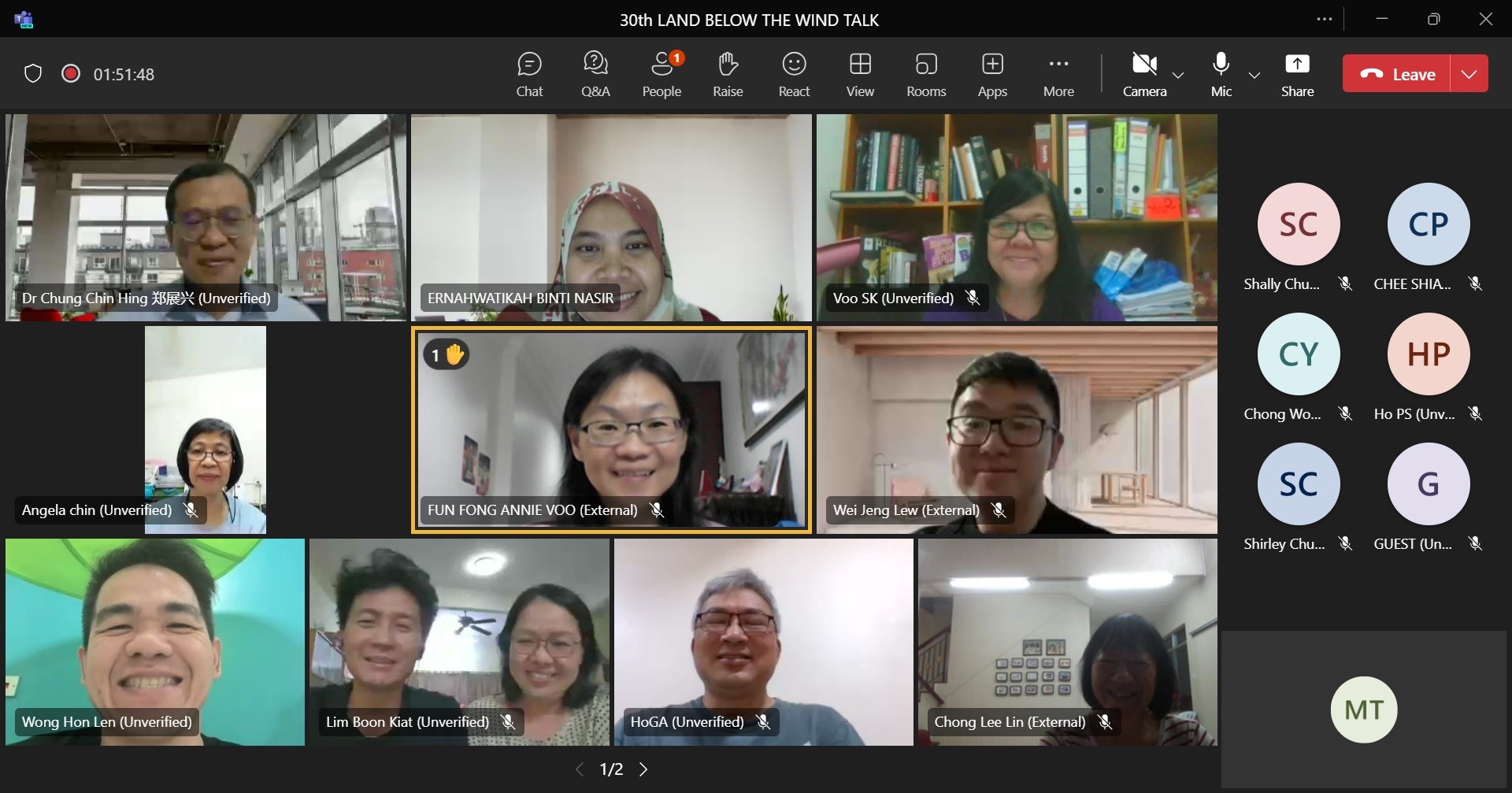
The Confucius Institute at Universiti Malaysia Sabah (CI@UMS) successfully hosted the 30th installment of its “Land Below the Wind Talk” series on the evening of March 30, 2024. Held via Microsoft Teams, the session featured Dr. Chung Chin Hing, Principal of Sabah Tshung Tsin Secondary School (STTSS), as the invited speaker. The talk was titled "Independent Schools in Sabah: STTSS Experience."
Dr. Chung, who holds a Ph.D. in Chemical Engineering and has a distinguished background in both academia and industry, shared valuable insights into the role and development of Chinese Independent Schools in Sabah. The session was divided into three key segments: an introduction to the independent school landscape in Sabah, a case study on STTSS showcasing the school’s mission, values, educational methodologies, and teacher training pathways, and a report on multilingual education among Chinese Independent School students, particularly within families residing in Kota Kinabalu.
The session commenced at 8:00 p.m. with a brief introduction by the moderator, followed by Dr. Chung’s presentation. A Q&A session was held at 8:45 p.m., allowing participants to engage directly with the speaker. The event concluded at 9:00 p.m.
Dr. Chung, an alumnus of STTSS himself, obtained his Bachelor's degree in Chemical Engineering with Honours from the University of Nottingham and later completed his MBA at Cardiff Business School, University of Wales. He earned his doctorate from Universiti Malaysia Sabah, specializing in residual oil recovery using nano and microfibers. His research excellence was recognized with the Outstanding Postgraduate Student Award (Science Category) in 2021.
Under his leadership, STTSS continues to uphold its strong tradition of academic excellence and multicultural education. Since being appointed principal in January 2020, Dr. Chung has contributed significantly to educational innovation and the integration of clean development mechanisms in engineering projects.
This talk is part of CI@UMS's ongoing efforts to promote cross-cultural and multilingual education dialogues, fostering greater understanding of the unique educational environment in Sabah.